Grover’s disease is a rare, itchy skin condition that most often appears in middle-aged men. WebMD explains the causes, symptoms, and treatment of this sudden rash.
Grover's disease causes an itchy rash primarily on the chest and back. Treatments include antihistamines, topical steroids, and natural remedies like coconut and olive oil. Avoid heat, sweating, and wearing tight clothes to help manage symptoms.
People with Grover’s disease typically develop an itchy rash on their chest and/or back. While it sometimes comes and goes on its own within a few weeks, in some patients it persists for months or years.
Transient acantholytic dermatosis, also known as Grover disease, is a common, acquired, itchy, truncal rash characterised by acantholysis on histopathology.
Also called transient acantholytic dermatosis, Grover’s disease typically presents as a rash on the chest and back. Intense itching often accompanies the rash. Possible treatments include oral...
Grover's disease is a rare skin condition that causes a severe rash on the chest or back. The exact cause is unclear, but excessive heat, sweating, and sun exposure can trigger this rash....
What are the signs and symptoms of Grover disease? The signs and symptoms of Grover disease include an extremely pruritic rash with reddish-brown papulovesicular lesions that resemble hyperkeratosis or eczematous plaques. These lesions may be widespread on the trunk, neck, and proximal extremities.
Grover’s disease is a rare skin condition. Most people with this condition get red, itchy spots, but others get blisters. This main symptom is nicknamed “Grover’srash.” The rash...
Grover's disease is an itchy skin condition on the chest and back. Grover's disease most often affects men over 50. It is also known as "transient acantholytic dermatosis", and is much less common in women or younger people. Grover's disease often starts quite suddenly.
What does Grover’s disease look and feel like? Grover’s disease causes groups of small bumps or blisters to appear on the chest, middle of the back and arms, which are usually itchy. These may be flesh-coloured, red, or sometimes darker in colour.
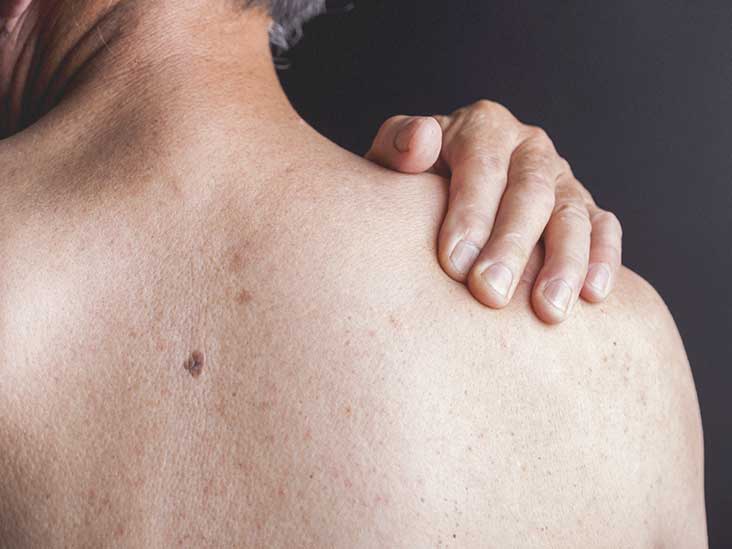 Grover’s disease is a rare skin condition. Most people with this condition get red, itchy spots, but others get blisters. This main symptom is nicknamed “Grover’s rash.” The rash...